Background

zdjęcie drzewa z liśćmi jako tło strony

“My clients are the experts on their own lives. My role is to offer new perspectives and tools, while leaving them complete freedom to determine what is useful to them — and what is not.”

Coaching tools and methods

Coaching is not just a conversation – it is demanding work that opens the path to lasting change and development. That is why I rely on tools that reveal leadership for what it truly is, and track change over time.

In my work, I rely on proven diagnostic tools and approaches developed over years of business and psychological practice. For years, I have been deepening my understanding of human nature – how the mind, emotions, and body function – and integrating these insights into the coaching process.

The foundations of my methodology are years of learning and experience in leadership and business. My approach is also grounded in what is natural and aligned with human physiology.

mała ikona drzewa z liśćmi i gałęziami w niebieskim kolorze i dwoma kreskami symbolizującymi cytat

“My clients are the experts on their own lives. My role is to offer new perspectives and tools, while leaving them complete freedom to determine what is useful to them – and what is not.”

PRO — Persona–Role–Organization. My Perspective on Leadership

I approach each client from multiple perspectives. In my work, I take into account three levels: the personal (identity and personality), the relational (the life and professional roles they inhabit), and the organizational (their belonging to organizations and systems). This approach enables a deeper understanding of how context shapes a leader’s decisions, emotions, and behaviors – and how these in turn impact those around them.

This makes the coaching process more insightful and effective. The individual objective (One Big Thing Goal) remains the axis of the work – but through the PRO framework, we can pursue it more effectively by taking into account the various dimensions of the client’s life and professional practice.


In individual work
#1

Leadership Circle ProfileTM (LCP)

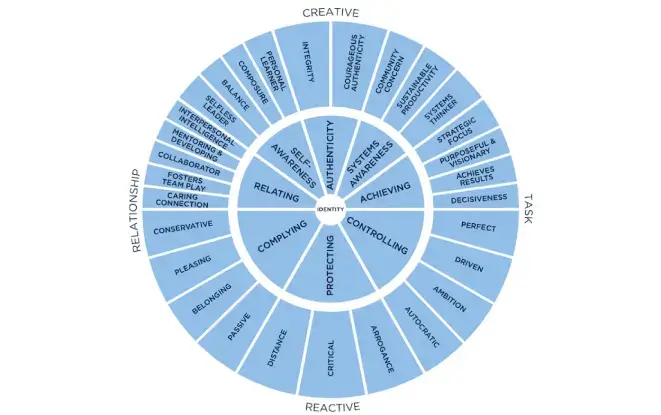
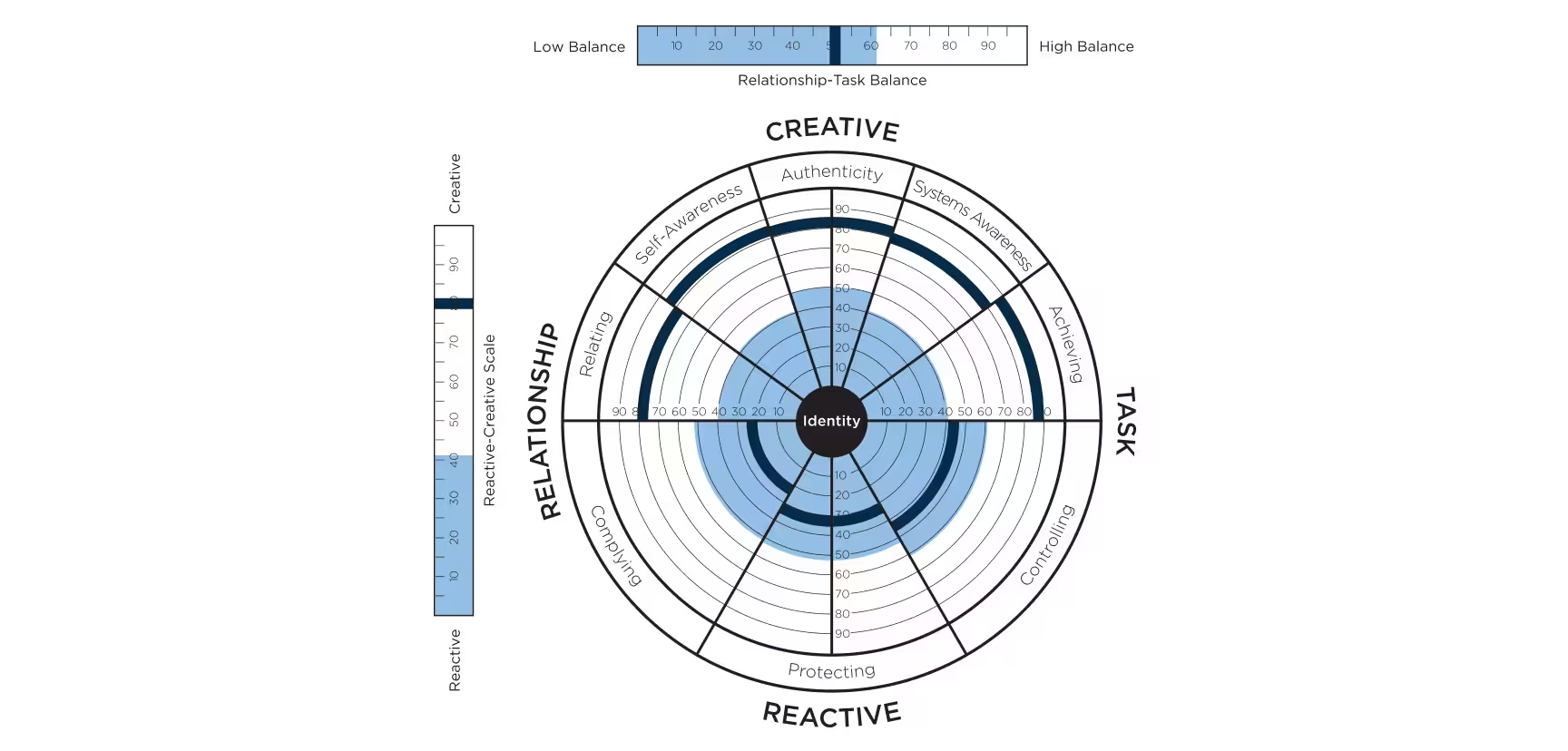
Imagine a tool that allows you to see yourself through the eyes of dozens of people — colleagues, superiors, direct reports — and confront that with what you yourself believe about your leadership. Leadership Circle Profile™ is exactly that radar: a 360° psychometric assessment that creates a portrait of leadership.
This is not just charts and graphs. It is a profound diagnostic:
"When do you operate from a place of fear — and when from a place of intentional energy?"
"How are you driven by control, perfectionism, and pressure - versus vision, care, and authenticity?"
"Are you able to draw energy from working with your team — or does that work, perhaps unconsciously, drain you?"
Leadership Circle Profile™ reveals the gap between our self-perception and the way others see us. It also provides a language and a map through which real transformation can begin.
In my work with leaders, I use the Leadership Circle Profile™ because it reveals hidden behavioral patterns. This allows the coaching conversation to go deeper. Clients discover what energizes them — and what depletes them. They also learn to operate from a place driven by creativity, rather than a permanent state of survival mode.
Leadership Circle Profile™ is not a magic bullet. It is a tool that allows you to set a course and develop leadership in a sustainable way — building relationships, protecting the leader's wellbeing, and ensuring more restful sleep.
zdjęcie przedstawiające dwa okrągłe diagramy jeden z napisami creative competencies reactive tendencies w kolorach jasno i ciemno niebieskich a drugi relationship task w kolorach jasno zielony i ciemnozielony
Author: Leadership Circle
Source: leadershipcircle.com
In group work
#2

Collective Leadership Assessment® (CLA)

CLA is a tool designed for work with teams, measuring the level of so-called collective leadership. This assessment reveals how a team functions as a whole — which mechanisms support its effectiveness, and which tendencies undermine it.
The CLA assessment is based on a questionnaire completed by all team members. The result is a report that:
  • shows the current state of the team’s culture and climate across 31 dimensions of leadership,
  • illustrates how the team envisions itself in those areas,
  • enables comparison of results against a global database of thousands of teams.

Benefits for the team:

  • easier adaptation to change and greater stability,
  • open learning from mistakes, preventing future ones,
  • bold knowledge-sharing and experimentation,
  • greater initiative and accountability among team members.
The result of the changes introduced is a more cohesive organizational culture, higher effectiveness, and fuller utilization of the potential of all team members. Over the longer term, organizational health also improves — turnover decreases, absenteeism declines, and engagement levels rise.
Author: Leadership Circle
Source: leadershipcircle.com
For measuring change
#3

PULSETM

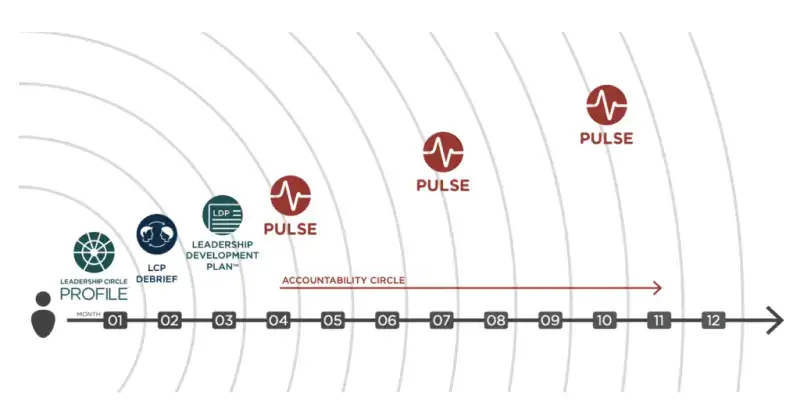
PULSE™ is a tool that enables progress in leadership to be tracked not on the basis of perception, but data. Every 2–4 months, brief surveys are sent to a selected group of stakeholders — typically up to 5 individuals from the client's professional circle, holding positions at the same or higher level than the coachee. The questions focus exclusively on the implementation of the defined One Big Thing Goal and the behaviors that should be introduced, maintained, or reduced.
The assessment functions as a mirror — revealing how the client's development is perceived by others, rather than how the client interprets it themselves. Importantly, the coach does not evaluate or issue opinions during the process. PULSE™ delivers objective data, showing whether — and to what extent — the client is implementing in practice the behaviors aligned with their defined development objective.
PULSE™ encompasses three measurement points:
  • Baseline PULSE Report – the starting point: an initial picture of behaviors and attitudes in relation to the One Big Thing Goal. At this stage, key elements are identified: one behavior that needs to stop (STOP) and one supporting behavior worth developing (START).
  • Interim PULSE Report – a report generated mid-process, providing a view of progress through the eyes of stakeholders and revealing how actions taken to date translate into the achievement of the objective.
  • Final PULSE Report the closing of the coaching engagement. It summarizes the entire process and reveals the degree to which the client has moved toward their One Big Thing Goal relative to the starting point.
Author: Leadership Circle
Source: leadershipcircle.com

Shoshin — "beginner's mind"

I ground my work with clients in an approach known as "beginner's mind" — shoshin. This stance allows me to listen without preconceived frameworks or judgments, with genuine curiosity and openness.
Maintaining "beginner's mind" allows me to create a space in the coaching process where the client can discover new solutions and a new perspective on themselves — not one shaped by routine or habit, but one that genuinely opens the door to transformation.
I strive to cultivate this same philosophy in the client — who, through deeper self-knowledge and the release of internal pressure, becomes capable of achieving remarkable results.
zdjęcie przedstawiające japoński most średniej wielkości, częściowo przysłonięty ramami okrągłego okna z którego robione jest zdjęcie
zdjęcie przedstawiające kamienie z mchem na nich leżące na zagrabionym żwirze